Connect AppsFlyer
AppsFlyer is the mobile measurement partner (MMP) Catchbase uses to attribute installs and in-app events to your Apple Ads taps. Connect AppsFlyer so Catchbase can join MMP events with Apple Ads taps, surface cohorted revenue (D0, D7, D14, D30) in analytics, and drive revenue and custom-event objectives on campaigns.
Before you start
- Apple Ads integration connected in Catchbase.
- Admin role in Catchbase.
- Admin access to AppsFlyer and an AppsFlyer API token with permission to read in-app events for the app you will connect.
- The app and the events you want to track are already configured and actively reporting in AppsFlyer.
Steps
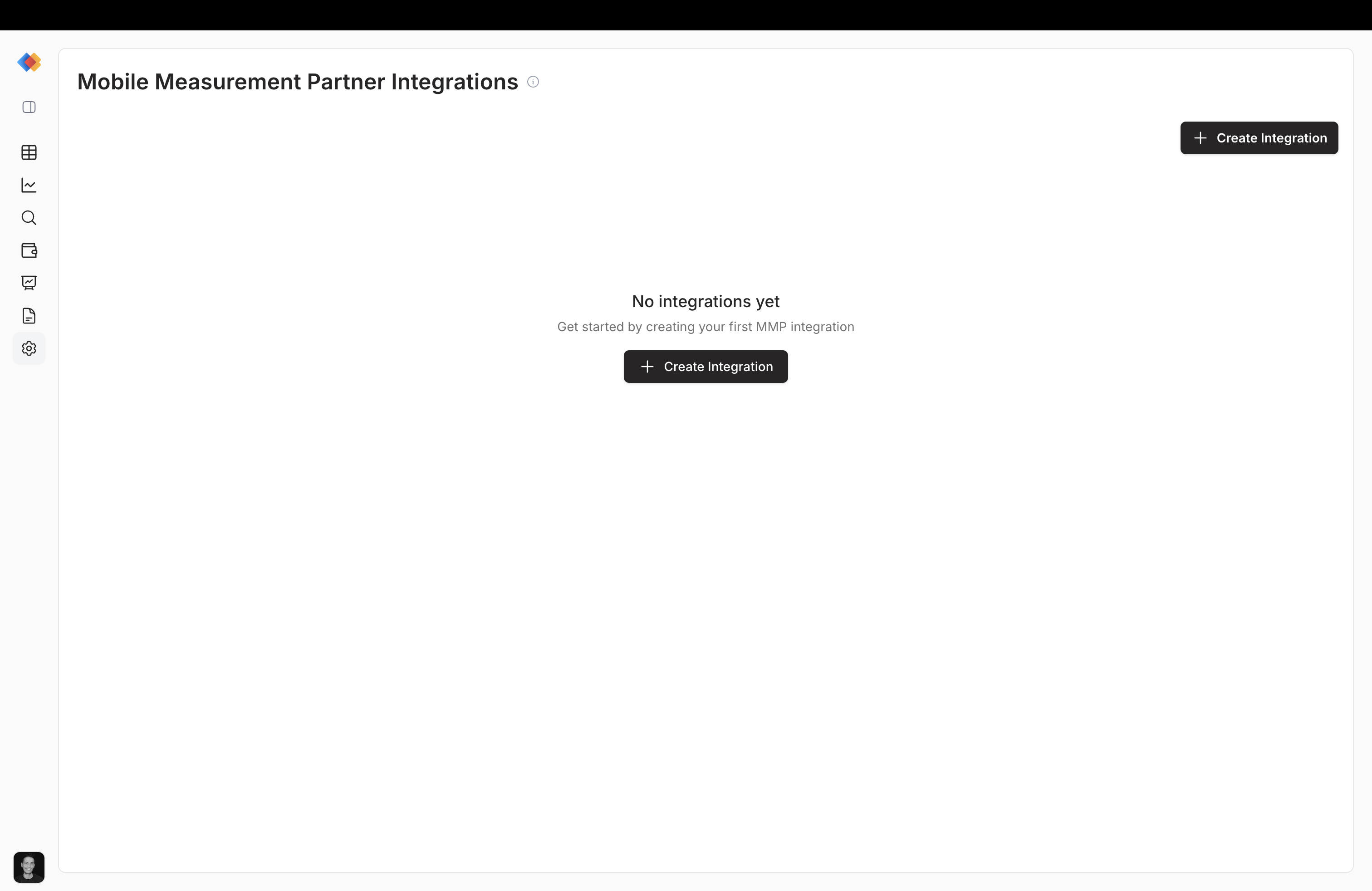
- Open Integrations. In the sidebar, go to Settings, then Integrations, then MMP. You land on the Mobile Measurement Partner Integrations list.
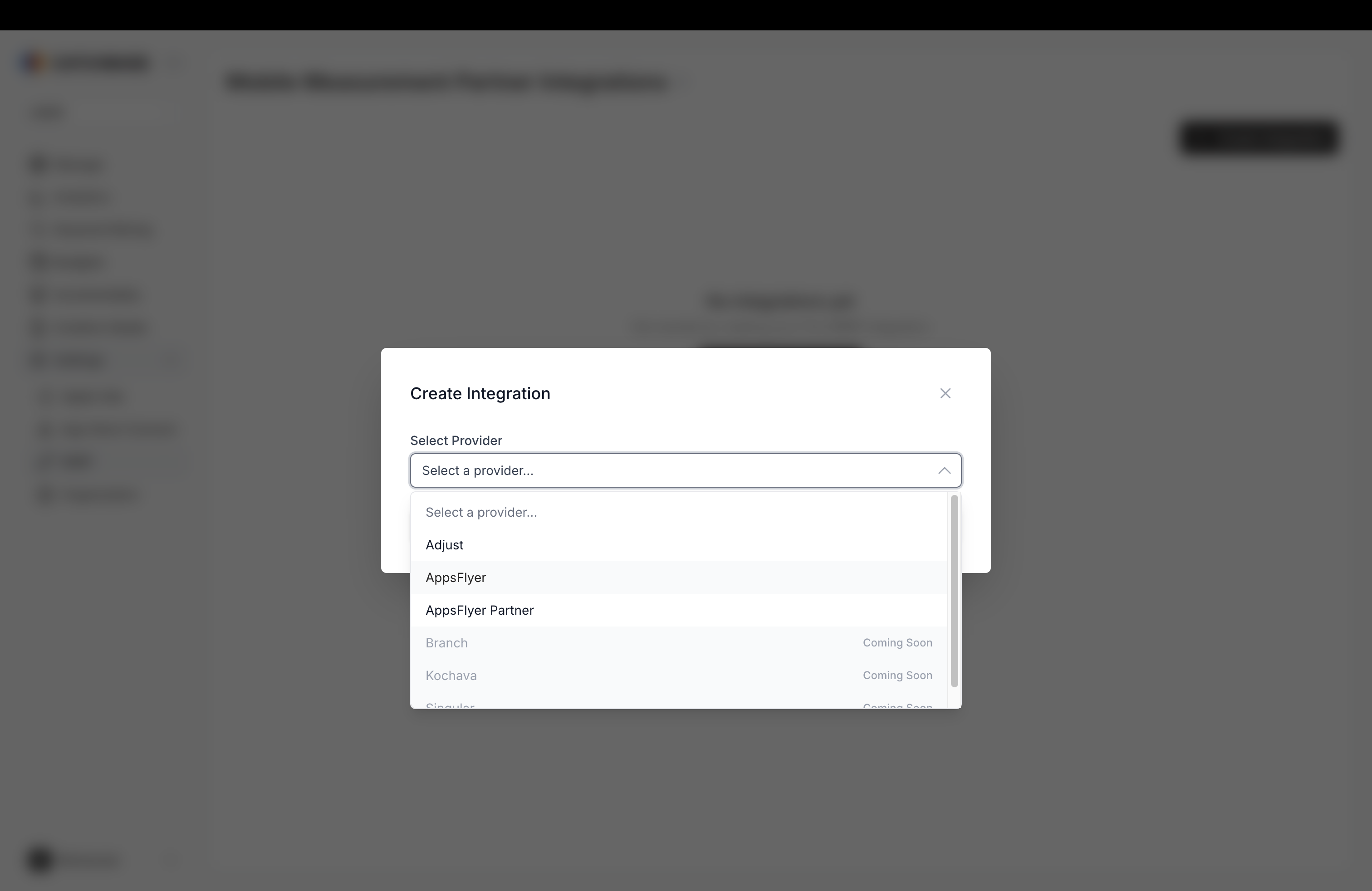
- Choose a connection method. Click Create Integration and open the provider picker. Catchbase offers two AppsFlyer options:
AppsFlyer, where you paste an API token (covered below) AppsFlyer Partner, where you grant access through the AppsFlyer Partner Marketplace.
Only one of the two can be active at a time.
-
Read the provider info. The modal opens on the Provider Info step. Click Next.
-
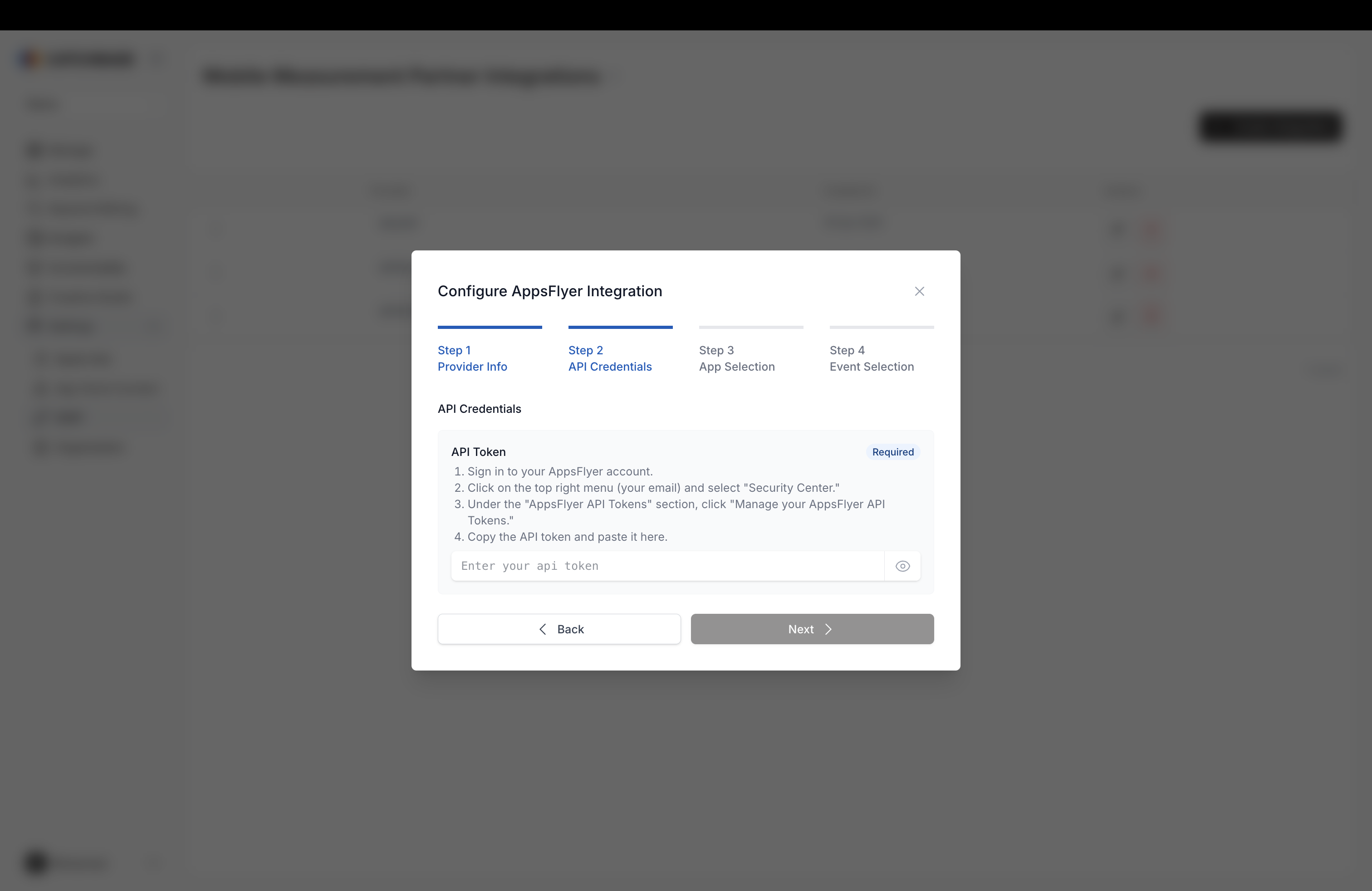
Enter your API token. On the API Credentials step, paste your AppsFlyer API token into the single required field. The input is masked by default; use the eye icon to reveal it while pasting. This is the only credential Catchbase needs. Click Next.
-
Select the app. Catchbase calls AppsFlyer with your token and lists the apps it can see. On the App Selection step, pick the app you want to connect. Each entry shows the app name and platform. If the list is empty or you see an "Invalid API key" error, go back and check the token.
-
Select the events. On the Event Selection step, Catchbase pulls the events AppsFlyer has recorded for the selected app over the last day. Pick every event you want to track. If you do not see an expected event, use the "Load events from N days" link to widen the lookback; the link adds a few days at a time, up to 10. You must select at least one event. Click Create Integration.
-
Verify the connection. The new integration appears in the MMP list with today's date. Expand the row to review connection details, the selected app, and the chosen events. A green toast confirms the save.
What data flows in
Catchbase pulls AppsFlyer raw in-app events filtered to Apple Ads as the media source. Lifetime revenue and cohorted D0 through D30 revenue are computed from these events using install time and event time. See Revenue and cohorts for the cohort windows.
First sync
Data begins loading when the integration is saved. For the AppsFlyer Partner path, data syncs nightly, so plan on up to 24 hours after creation before events appear on the Campaigns page and objective metrics become selectable. The in-product message at integration time states the same window. Cohorted revenue windows (D7, D14, D30) also need time to mature before values stabilise.
Limits
- Only one AppsFlyer integration (token or Partner) active per organization. The provider picker blocks you from creating a second AppsFlyer path while one is already connected.
- The two paths differ in their setup: the AppsFlyer (token) path walks a four-step modal (Provider Info, API Credentials, App Selection, Event Selection). The AppsFlyer Partner path is three steps (Provider Setup, App Selection, Review & Save) because the marketplace grant replaces the token step.
- Editing an existing AppsFlyer integration is limited to the event list. The API token (for the token path) and the app selection become read-only once the integration is saved. To change the token or the apps it covers, delete the integration and create a new one.
- AppsFlyer only captures revenue for events you list in the integration. Missing events will understate revenue.
- Events must exist in AppsFlyer before they appear in the picker. The initial list covers the events AppsFlyer has reported in roughly the last 4 to 5 days. If a specific event is not in the list yet, use the Load more link in the picker to extend the lookback; each click adds another 4 to 5 days up to a maximum of 10 days. Events older than that are unreachable through the picker, so if you rarely send a given event, verify that it has fired within the past 10 days before expecting it here.